
KEYNOTE SPEAKERS:
|
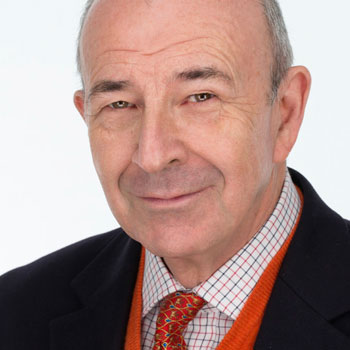
Professor Erol Gelenbe, IEEE Fellow, Institute of Theoretical and Applied Informatics, Polish Academy of Science, Poland
website: https://www.linkedin.com/in/erol-gelenbe-1025ba/ |
SPEECH TITLE: "AI Viewed as Optimization and Simulation"
SUMMARY:
We will briefly review the historical and computational basis of contemporary AI, going from early algorithmic computation and computational machines (Pascal and Babbage), the transciption of Babbage’s Lectures in Torino by Luigi Menabrea (published in French in Geneva), and the English translation of Menabrea’s article by Countess Lovelace, and her «warning», the contributions of Alonzo Church and Alan Turing (1937, 1938), Golgi’s Neural Network hypothesis (circa 1900), the invention of contemporary artificial neural network models (McCulloch and Pitts, 1940s) and their effect on Kleene’s «Regular Expressions» (1951), the introduction of « artificial intelligence (John McCarthy, 1956), the earliest «large language model» ELIZA (Joseph Weizenbaum, 1960s), and deep learning (Paul Werbos, 1970s). Then, we will describe the spiking nature of natural mammalian brain neurons (Terry Sejnowski, 1980s), and introduce the Random Neural Network (RNN) that mimics the temporal behaviour of biological neurons. The RNN’s Chapman-Kolmogorov equations and their solution, and the RNN’s capability as a universal approximator for continuous and bounded functions will be discussed. The «recurrent» RNN model with a well-defined solution and non-linear computational structure, will lead to its O(n^3) deep learning algorithm where optimization techniques such as FISTA. The analogy between RNN learning and deep learning with conventional sigmoidal neural networks will also be exhibited. Based on these results, we will illustrate various uses of the RNN, such as adaptive communication packet-network routing, tumor detection from brain Magnetic Resonance Images, color texture learning and generation, and the detection of Botnets and other cyberattacks.
ABOUT THE SPEAKER:
FIEEE and FACM, was born in Istanbul and graduated in Electrical Engineering from METU (Ankara), and received a PhD from New York University and the Doctor of Science degree from the Sorbonne (Paris). A world-leading researcher in computer and network performance and AI, he has graduated over 90 PhDs. He invented the Random Neural Network and the stochastic networks known as G-Networks, he derived the optimum control algorithm for ALOHA random access communications and the optimum checkpointing algorithm for databases, computed page fault rates for large classes of page replacement algorithms, and participated in the creation of commercial products such as the modelling tools QNAP and FLEXSIM. He was awarded Honoris Causa doctorates by University of Roma II (Italy, 1996), Bogaziçi University (Istanbul, 2004), University of Liège (Belgium, 2006), and the Hungarian Academy of Sciences (2010). He won the Parlar Foundation Award (Ankara, 1994), the Grand Prix France-Telecom (1996), the ACM SIGMETRICS Award (2010), the IET Innovation Award (2010), and the Mustafa Prize (2017). He was made a Chevalier de la Légion d'Honneur (2014), Commander of Merit of Italy (2005) and France (2019), Commander of the Crown of Belgium (2022), and Officer of Merit of Poland (2024). He is a Fellow of Bilim Akademisi (Science Academy, Istanbul) and the French National Academy of Technologies, a Member of Academia Europaea, a Foreign Fellow of the Royal Academy of Belgium, the Polish Academy of Sciences and the Indian National Science Academy, and an Honorary Fellow of the Hungarian Academy of Sciences and the islamic World Academy of Sciences.
|
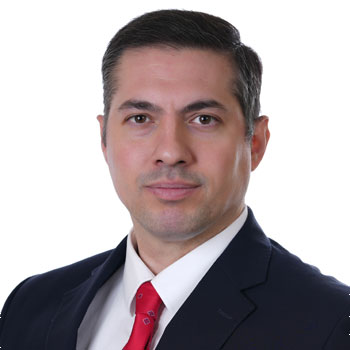
Professor Huseyin Atakan Varol, SMIEEE, Director, Institute of Smart Systems and Artificial Intelligence, Nazarbayev University, Kazakhstan
website: https://www.linkedin.com/in/atakan-varol-77568532/ |
SPEECH TITLE: "Creating Generative AI Models for Low-Resource Contexts: Dataset Preparation, Model Training, and Service Deployment"
SUMMARY:
The development of generative AI technologies typically caters to resource-rich languages, often leaving underrepresented linguistic contexts behind. To bridge this gap and actively support the digital sovereignty of Kazakhstan, the Institute of Smart Systems and Artificial Intelligence (ISSAI) released KazLLM as an open-source foundation model. Since then, we have expanded our efforts into a dual-pronged ecosystem: open-source multimodal small generative AI models, such as the Qolda family, operating alongside a suite of closed-source production services hosted on the ISSAI Playground. In this keynote address, we will explore the end-to-end technical journey of building this localized generative AI stack from the ground up, moving beyond mere linguistic fluency to embed deep, nation-specific cultural semantics into generative architectures while retaining performance for the global context. Drawing upon our hands-on experience, we will detail a rigorous methodology for localized AI development that balances the democratization of open-source models with the scalable deployment of proprietary AI products, including the Oylan language-audio-vision model, the Beynele image generation engine, and the Mangisoz translation service. Specifically, we will highlight the curation of specialized datasets using the KazCulture dataset as a primary example, which leverages over 16,000 human-crafted Passage-Question-Answer triplets to capture nuanced cultural traditions. To overcome performance disparities between localized open-source systems and frontier models, we will outline a robust two-stage adaptation pipeline utilizing a general multilingual dataset followed by targeted cultural fine-tuning. Furthermore, we will address critical engineering hurdles in resource-efficient training, vision-language model (VLM) quantization, and the robust backend architecture required for scalable services. Ultimately, this comprehensive pipeline serves as a reproducible recipe for regions outside the traditional AI superpowers, equipping researchers and policymakers with actionable technical insights to foster indigenous AI innovation and enhance technological self-reliance.
ABOUT THE SPEAKER:
Huseyin Atakan Varol is a full professor of robotics and the founding director of the Institute of Smart Systems and Artificial Intelligence (ISSAI) at Nazarbayev University. He holds a BS in mechatronics engineering from Sabanci University and MS and PhD degrees in electrical engineering from Vanderbilt University. Dr. Varol's research interests include generative artificial intelligence, soft robotics, sensor fusion, and biometrics. He has authored over 160 technical papers in leading international journals and conferences. Additionally, he holds multiple international patents in bionics, consults for major companies, and has secured competitively funded research grants from the Ministry of Science and Higher Education of Kazakhstan, the World Bank, and the Nazarbayev University Research Fund. Since 2019, his focus has been on establishing ISSAI as a world-class AI research institute in Kazakhstan. Under his leadership, the Institute developed the Kazakh Large Language Model (KAZLLM). He is currently spearheading the development of Kazakhstan's national generative AI stack, which includes models, products, and services such as Oylan language-audio-vision model, Beynele image generation engine, Tilsync real-time translation service, and Mangisoz foundational speech and text translator.
|
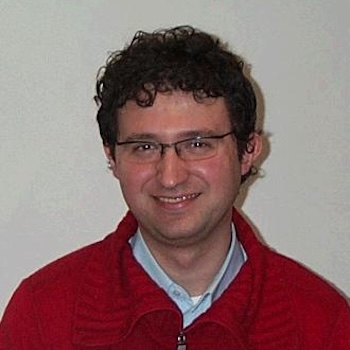
Professor Luca Sterpone, Chair of Control and Computer Engineering Department (DAUIN), Politecnico di Turino, Italy
website: https://it.linkedin.com/in/luca-sterpone-2a3990b/ |
SPEECH TITLE: "Multi-Core Clustered Computing Architectures in Aerospace: Towards the New Space Era"
SUMMARY:
This presentation explores the transition of aerospace computing into the "New Space" era, driven by the adoption of Multi-Core Clustered Computing Architectures. Traditional space missions relied on highly specialized, radiation-hardened single-core processors. However, modern mega-constellations, autonomous navigation, and real-time on-board data processing demand unprecedented computational throughput. The talk analyzes how clustered multi-core Commercial Off-The-Shelf (COTS) architectures fulfill these performance needs while operating under strict Size, Weight, and Power (SWaP) constraints. The presentation provides a solution for enhancing the reliability of cluster-based computing systems through custom-designed hardware solutions: beacon controllers and a robust bus, as well as error correction and workload redirection mechanisms. We investigate the critical challenges of this paradigm shift, focusing on software parallelization, thermal management, and fault-tolerance mechanisms against radiation-induced single-event upsets (SEUs). Finally, a comparative evaluation of current multi-core clustering techniques in flight software is given. The results demonstrate that clustered architectures provide a scalable, cost-effective solution, establishing them as the foundational backbone for next-generation autonomous space exploration.
ABOUT THE SPEAKER:
Luca Sterpone is a Full Professor with the CAD and Reliability group and Head of the Control and Computer Engineering Department (DAUIN) for the 2023–2027 academic period. He also coordinates the Aerospace and Safety Computing Lab. His research focuses on computer engineering, specifically covering reconfigurable computing, computer-aided design (CAD) algorithms, fault tolerance, and reliability. Author of more than 230 papers, he has served as General Chair for major international events such as ACM Computing Frontiers and HiPEAC WRC. He actively collaborates with leading aerospace and technology companies, including AMD Xilinx, NVIDIA, and the European Space Agency (ESA). Furthermore, he serves as an expert evaluator for the European Commission (Horizon Europe), HaDEA, and the Italian evaluation agency ANVUR.